Manufacturing
- BARK FUSE
- Manufacturing

High-Conversion "Manufacturing"
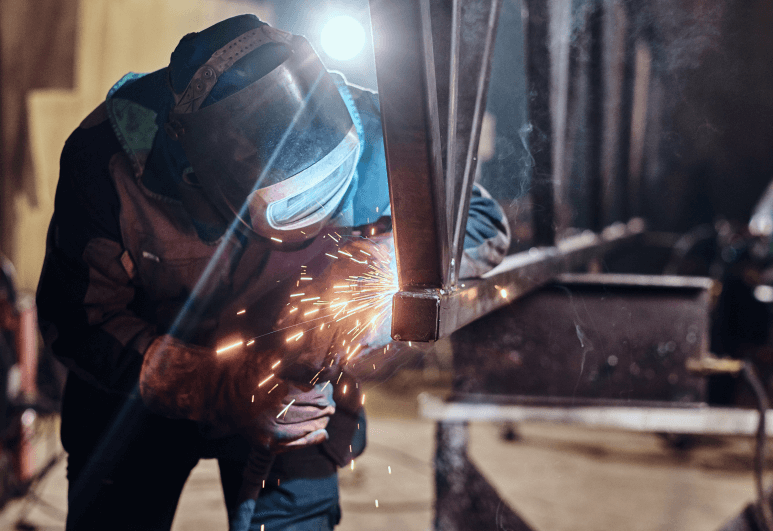
Advanced Metal Manufacturing & Fabrication At Barkfuse (Ultimate Metalcraft Solutions), we don't just weld; we build the future of infrastructure. Our manufacturing facility is equipped to handle everything from intricate custom prototypes to heavy-duty structural steel assemblies. By combining veteran craftsmanship with modern CNC technology, we ensure every piece that leaves our floor meets the highest safety and durability standards.
The Core "Process"
01: Design & CAD We transform concepts into technical blueprints using advanced CAD software to ensure 100% dimensional accuracy.
02:Precision Cutting Utilizing CNC Plasma and high-grade shearing tools to prep materials with minimal waste and tight tolerances.
03:Forming & Bending Expert metal folding and press brake services to create complex structural shapes and enclosures.
04:Certified Assembly Precision MIG, TIG, and Stick welding to fuse components into high-strength, durable structures.
05:Finishing & QC Final surface treatments (polishing, painting, or coating) and a rigorous quality inspection before delivery.
Why Choose Our Voldor?
Certified Expert & Team
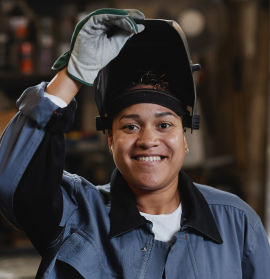
At Barkfuse, our machinery is top-tier, but our people are our greatest asset. Our team consists of AWS-certified welders and seasoned project managers who bring decades of combined experience to every manufacturing project.
Fast Reliable Services
We understand that in manufacturing, downtime is lost revenue. At Barkfuse, we’ve optimized our shop floor to deliver high-speed fabrication cycles while maintaining the structural integrity your project demands.
Our Few Benefits
We combine industrial-scale manufacturing power with the personalized attention of a boutique fabrication studio. When you choose Barkfuse, you gain more than a vendor—you gain a technical partner.
- Customization Without Limits
- Cost-Effective Material Sourcing
- Structural Integrity Guaranteed
How do I prepare metal surfaces for welding?
Before the first spark flies, the surface must be pristine. Proper preparation ensures maximum penetration and zero defects.
1. Remove Surface Contaminants
Use a degreaser or acetone to strip away oils, grease, and shop grime. Even fingerprints can leave oils that cause porosity (bubbles) in your weld, especially with Aluminum.
2. Mechanical Cleaning (The "Bright Metal" Rule)
Grind or wire-brush the weld zone until you see shiny, "bright" metal.
Steel: Remove all mill scale and rust.
Stainless Steel: Use a dedicated stainless-steel brush to avoid cross-contamination.
Aluminum: Always brush off the invisible oxide layer right before welding.
3. Beveling & Joint Fit-up
For thicker materials (above 3/16"), grind a V-groove or bevel into the edges. This allows the weld bead to penetrate deep into the joint rather than just sitting on the surface.
4. Final Tack & Square
Ensure the pieces are clamped tightly with no gaps. Use "tack welds" to hold the geometry in place, checking for squareness before committing to the final bead.
How do I prevent weld distortion?
To keep your fabrication perfectly square and true to the blueprints, our team utilizes these industrial techniques:
1. Strategic Tack Welding
Never start a long bead without "locking" the metal first. We place short, strong tack welds at critical intervals to create a rigid skeleton that resists pulling as the main weld cools.
2. The "Back-Step" Technique
Instead of welding in one long, continuous direction (which builds up massive heat at one end), we weld in short sections in the opposite direction of the overall travel. This distributes heat more evenly across the joint.
3. Clamping & Fixturing
We use heavy-duty industrial clamps and custom-built jigs to physically restrain the metal. By holding the pieces in a fixed position during the cooling phase, we force the metal to maintain its intended geometry.
4. Planned Pre-Setting
Expert fabricators know which way a weld will "pull." We often pre-set parts at a slight angle opposite to the expected distortion, so that when the weld cools, it pulls the metal perfectly into a 90-degree square.
5. Controlled Heat Input
Interpass Cooling: Allowing the metal to reach a specific temperature before the next pass.
Travel Speed: Moving at the optimal speed to ensure penetration without "soaking" the surrounding metal in unnecessary heat.
Can different metals be welded together?
When you join two different metals, you aren't just melting them; you are creating a new "alloy" at the joint. Here is what our team at Barkfuse manages:
Different Melting Points: If Metal A melts at 1,200°C and Metal B melts at 660°C (like Steel and Aluminum), Metal B will turn to liquid or vaporize before Metal A even gets soft.
Thermal Expansion: Metals grow and shrink at different rates. If they don't "move" together during cooling, the weld will literally rip itself apart (stress cracking).
Galvanic Corrosion: Some metals, when touched together, create a tiny electrical battery that causes the joint to rust or "eat itself" over time.
What types of welding are there?
Industrial Welding Processes at Barkfuse
1. MIG Welding (GMAW)
What it is: Uses a continuous solid wire electrode fed through a welding gun.
Best for: High-speed manufacturing, structural steel, and thick plates.
The Benefit: It is the most efficient and cost-effective method for large-scale fabrication and heavy-duty repairs.
2. TIG Welding (GTAW)
What it is: Uses a non-consumable tungsten electrode to produce the weld.
Best for: Aluminum, Stainless Steel, and thin-gauge metals.
The Benefit: Offers the highest level of precision and aesthetics. If your project requires a "surgical" look (like high-end furniture or marine hardware), TIG is the standard.
3. Stick Welding (SMAW)
What it is: Uses a consumable electrode coated in flux (the "stick").
Best for: Outdoor construction, rusty/dirty metals, and heavy structural onsite work.
The Benefit: It is the most versatile and portable. It works in wind and rain where gas-shielded methods (MIG/TIG) would fail.
4. Flux-Cored Welding (FCAW)
What it is: Similar to MIG, but the wire has a flux core that protects the weld.
Best for: Heavy-duty industrial fabrication and thick structural steel.
The Benefit: Provides deeper penetration than standard MIG and is excellent for high-deposition, fast-turnaround industrial jobs